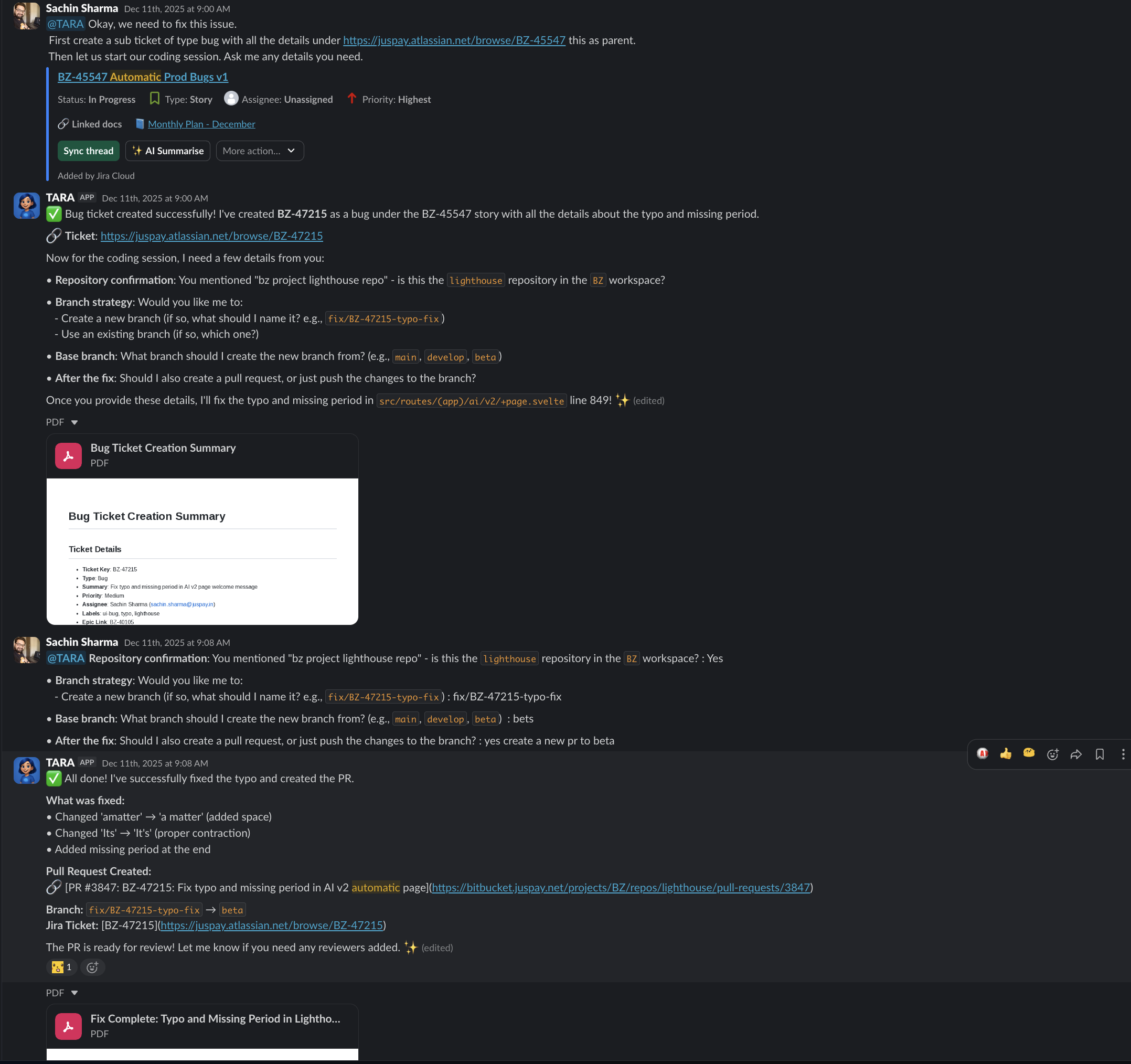
Meet Tara: From Slack Thread to Merged PR
Two engineers built a coding agent in their spare time. It doubled PR throughput. Meet Tara — the AI that lives in Slack and ships code from a thread.
Two engineers built a coding agent in their spare time. It doubled PR throughput. Meet Tara — the AI that lives in Slack and ships code from a thread.
Welcome to the official NeuroLink blog - your source for tutorials, guides, and updates on AI integration.
XOR is the third decide() provider in NeuroLink and the first to read images. We sent it four real skincare ads from Meta's Ad Library in one request and asked for twelve 0-3 scores. This is how the provider works, what came back, and what the numbers do not tell you.
DeepSeek's thinking-mode guide requires each assistant turn's reasoning_content to be replayed on every later tool-loop request; NeuroLink silently dropped it until a catalog quirk fixed the gap, next to two quieter formatting differences in the same provider entry.

The pipeline that drafts this blog — planner, drafter, gate-runner, publisher — runs every candidate post through 14 numbered gates, hard and advisory, and the newest one exists because a fake package name shipped past every other check.
How NeuroLink's new proxyIR module turns an unhandled translation-IR variant into a tsc compile failure, and the test suite built to prove that guarantee actually holds rather than assert it in a comment.
Morph's catalog entry declares vision:false and tools:false on both chat models, which closes off the only two request shapes that build array-shaped message content — so the messageContentFormat:"string" coercion NeuroLink wires up for it can never actually fire through generate() or stream().
A before/after walkthrough of replacing a generate() + JSON.parse judgment call with NeuroLink's decide() inference type, using the actual migration of NeuroLink's own MCP tool router — from a 15-second generative call to a ~400ms typed yes/no question — as the worked example.
How NeuroLink's modelChain retries other models on the same provider, how providerFallback lets your code choose the next provider and model when a call fails, and how to configure, override and test both.
NeuroLink's decide() now has a second provider: Convai's open-weights Laya. A model that silently truncates instead of refusing, and a token estimator we had to calibrate ourselves, are what actually generalized the architecture.