Server Adapters: Building AI APIs with Hono, Express, Fastify, or Koa
Expose NeuroLink AI capabilities as production HTTP APIs using Hono, Express, Fastify, or Koa with CORS, rate limiting, and SSE streaming.

In this guide, you will build AI-powered APIs using NeuroLink’s server adapters for Hono, Express, Fastify, and Koa. You will configure each framework, add streaming endpoints, implement middleware for authentication and rate limiting, and deploy a production-ready AI API server.
NeuroLink’s server adapters turn your AI into a production HTTP API with minimal code – and they bring CORS, rate limiting, SSE streaming, graceful shutdown, and OpenAPI documentation out of the box.
The SDK ships four framework-specific adapters: Hono (recommended), Express, Fastify, and Koa. All adapters extend BaseServerAdapter, providing a consistent lifecycle and feature set regardless of framework choice. The factory pattern (ServerAdapterFactory.create() / createServer()) lets you switch frameworks with a single config change.
Architecture Overview
The server adapter system sits between your clients and the NeuroLink SDK, adding HTTP infrastructure around your AI capabilities.
flowchart TB
    subgraph Clients["Clients"]
        WEB["Web App"]
        MOB["Mobile App"]
        CLI["CLI Tool"]
    end

    subgraph Factory["ServerAdapterFactory"]
        direction LR
        CF["create({ framework, neurolink, config })"]
    end

    subgraph Adapter["BaseServerAdapter"]
        subgraph MW["Built-in Middleware"]
            REQID["Request ID"]
            LOGGING["Logging"]
            CORS["CORS"]
            RATE["Rate Limiting"]
            SEC["Security Headers"]
            TIMEOUT["Timeout"]
        end

        subgraph Routes["Pre-built Route Groups"]
            AGENT["/api/agent<br/>execute & stream"]
            HEALTH["/api/health<br/>liveness & readiness"]
            TOOLS["/api/tools<br/>list & execute"]
            MCP_R["/api/mcp<br/>MCP servers"]
            MEMORY["/api/memory<br/>sessions"]
            OPENAPI_R["/api/openapi<br/>OpenAPI spec"]
        end
    end

    subgraph Frameworks["Framework Implementations"]
        HONO["HonoServerAdapter<br/>Node / Bun / Deno / Edge"]
        EXPRESS["ExpressServerAdapter<br/>Node.js"]
        FASTIFY["FastifyServerAdapter<br/>Node.js"]
        KOA["KoaServerAdapter<br/>Node.js"]
    end

    subgraph Core["NeuroLink Core"]
        NL["NeuroLink SDK"]
        PROV["13+ AI Providers"]
    end

    Clients --> MW
    MW --> Routes
    Routes --> NL
    NL --> PROV
    CF --> Frameworks
    Frameworks --> Adapter

    style HONO fill:#e36209,stroke:#bd5200,color:#fff
    style EXPRESS fill:#68a063,stroke:#4e7e4a,color:#fff
    style FASTIFY fill:#000000,stroke:#333,color:#fff
    style KOA fill:#33333d,stroke:#555,color:#fff
    style NL fill:#6366f1,stroke:#4f46e5,color:#fff
    style AGENT fill:#3b82f6,stroke:#2563eb,color:#fff
    style HEALTH fill:#22c55e,stroke:#16a34a,color:#fff
The BaseServerAdapter abstract class (source: src/lib/server/abstract/baseServerAdapter.ts) defines the adapter contract:
- Framework methods:
initializeFramework(),registerFrameworkRoute(),registerFrameworkMiddleware() - Lifecycle methods:
start(),stop(),getFrameworkInstance() - Graceful shutdown:
stopAcceptingConnections(),closeServer(),forceCloseConnections()
Each adapter implements these methods for its framework. The ServerAdapterFactory provides convenience methods for creating any adapter.
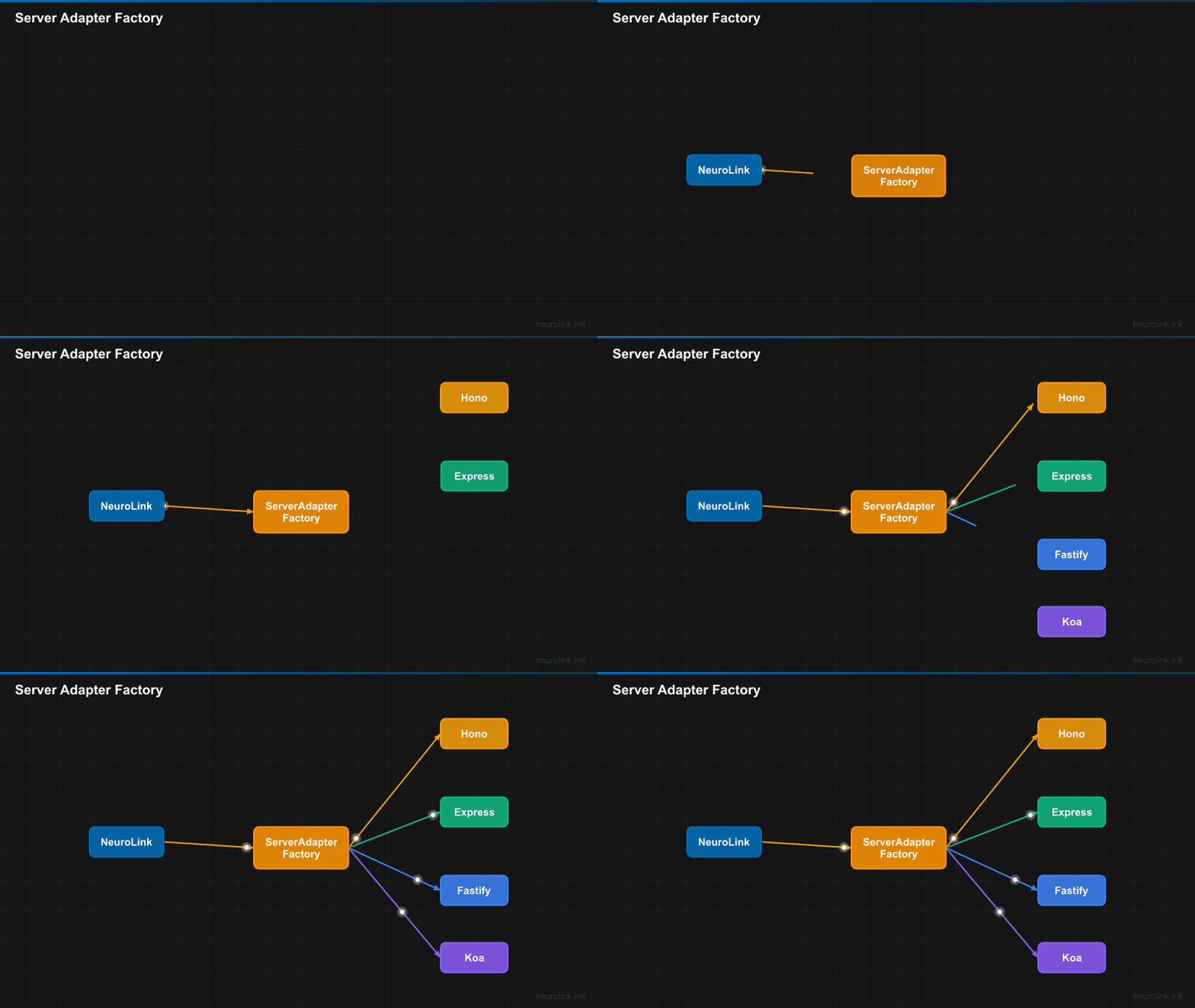
Quickstart: The Factory Pattern
The simplest way to create a server is the createServer() helper function.
1
2
3
4
5
6
7
8
9
10
11
12
13
14
15
16
17
18
19
20
21
22
23
24
25
26
27
28
29
30
31
32
33
34
35
36
37
38
39
40
41
42
43
44
45
46
47
48
import { NeuroLink } from '@juspay/neurolink';
import { createServer, registerAllRoutes } from '@juspay/neurolink/server';

const neurolink = new NeuroLink({
  conversationMemory: { enabled: true },
});

// Create server (defaults to Hono)
const server = await createServer(neurolink, {
  framework: 'hono', // 'hono' | 'express' | 'fastify' | 'koa'
  config: {
    port: 3000,
    host: '0.0.0.0',
    basePath: '/api',
    cors: {
      enabled: true,
      origins: ['https://myapp.com'],
      methods: ['GET', 'POST', 'PUT', 'DELETE', 'PATCH', 'OPTIONS'],
      headers: ['Content-Type', 'Authorization', 'X-Request-ID'],
      credentials: false,
      maxAge: 86400,
    },
    rateLimit: {
      enabled: true,
      windowMs: 15 * 60 * 1000, // 15 minutes
      maxRequests: 100,
      message: 'Too many requests, please try again later',
    },
    bodyParser: {
      enabled: true,
      maxSize: '10mb',
    },
    logging: {
      enabled: true,
      level: 'info',
    },
    timeout: 30000,
    enableMetrics: true,
    enableSwagger: true,
  },
});

// Register all pre-built routes
registerAllRoutes(server, '/api', { enableSwagger: true });

// Initialize and start
await server.initialize();
await server.start();
After starting, your AI is available as an HTTP API:
| Endpoint | Method | Description |
|---|---|---|
/api/agent/execute | POST | Generate text with AI |
/api/agent/stream | POST | Stream AI response via SSE |
/api/agent/providers | GET | List available AI providers |
/api/tools | GET | List registered tools |
/api/tools/:name/execute | POST | Execute a tool |
/api/mcp/servers | GET | List MCP servers |
/api/memory/sessions | GET | List conversation sessions |
/api/health | GET | Liveness check |
/api/ready | GET | Readiness check |
/api/metrics | GET | Server metrics |
/api/openapi.json | GET | OpenAPI 3.1 spec |
Hono Adapter (Recommended)
Hono is the recommended framework for new projects. It supports multiple runtimes (Node.js, Bun, Deno, Edge), has native TypeScript support, and provides built-in middleware for CORS, security headers, and more.
1
2
3
4
5
6
7
8
9
10
11
12
13
14
15
16
17
18
import { NeuroLink } from '@juspay/neurolink';
import { ServerAdapterFactory, registerAllRoutes } from '@juspay/neurolink/server';

const neurolink = new NeuroLink();

const server = await ServerAdapterFactory.createHono(neurolink, {
  port: 3000,
  cors: { enabled: true, origins: ['*'] },
  rateLimit: { enabled: true, windowMs: 60000, maxRequests: 100 },
  enableSwagger: true,
});

registerAllRoutes(server, '/api', { enableSwagger: true });
await server.initialize();
await server.start();

// Access the raw Hono app for custom routes
const app = server.getFrameworkInstance(); // Returns Hono instance
Hono highlights:
- SSE streaming via
streamSSE()fromhono/streaming - Built-in in-memory rate limiter with periodic cleanup
- Security headers via
hono/secure-headers - Supports Node.js (
@hono/node-server), Bun (Bun.serve()), and Deno (Deno.serve())
Express Adapter
For existing Express applications, the Express adapter integrates NeuroLink without changing your framework.
1
2
3
4
5
6
7
8
9
10
11
12
13
14
15
16
17
18
19
20
21
22
import { NeuroLink } from '@juspay/neurolink';
import { ServerAdapterFactory, registerAllRoutes } from '@juspay/neurolink/server';

const neurolink = new NeuroLink();

const server = await ServerAdapterFactory.createExpress(neurolink, {
  port: 3000,
  cors: { enabled: true, origins: ['https://myapp.com'] },
  rateLimit: { enabled: true, windowMs: 60000, maxRequests: 50 },
});

registerAllRoutes(server);
await server.initialize();
await server.start();

// Access the raw Express app
const expressApp = server.getFrameworkInstance();

// Add your own Express routes alongside NeuroLink
expressApp.get('/custom', (req, res) => {
  res.json({ message: 'Custom route works alongside NeuroLink' });
});
Express highlights:
- Dynamic
import('express')to avoid bundling Express when not used - Integrates
corsandexpress-rate-limitpackages via dynamic imports - Socket tracking for graceful shutdown
- SSE streaming writes directly to
reswithtext/event-streamcontent type
Fastify Adapter
Fastify provides excellent performance and built-in schema validation.
1
2
3
4
5
6
7
8
9
10
11
12
13
14
15
16
17
import { NeuroLink } from '@juspay/neurolink';
import { ServerAdapterFactory, registerAllRoutes } from '@juspay/neurolink/server';

const neurolink = new NeuroLink();

const server = await ServerAdapterFactory.createFastify(neurolink, {
  port: 3000,
  logging: { enabled: true, level: 'info' },
  rateLimit: { enabled: true, windowMs: 60000, maxRequests: 200 },
});

registerAllRoutes(server);
await server.initialize();
await server.start();

// Access the raw Fastify instance
const fastify = server.getFrameworkInstance();
Fastify highlights:
- Dynamic imports for
fastify,@fastify/cors,@fastify/rate-limit - Uses Fastify’s
addHook('preHandler', ...)for middleware - Built-in request ID generation
- SSE streaming via
reply.raw(underlying Node.js response)
Koa Adapter
For minimalist applications that prefer Koa’s middleware composition model.
1
2
3
4
5
6
7
8
9
10
11
12
13
14
import { NeuroLink } from '@juspay/neurolink';
import { ServerAdapterFactory, registerAllRoutes } from '@juspay/neurolink/server';

const neurolink = new NeuroLink();

const server = await ServerAdapterFactory.createKoa(neurolink, {
  port: 3000,
  cors: { enabled: true, origins: ['*'] },
  bodyParser: { enabled: true, jsonLimit: '10mb' },
});

registerAllRoutes(server);
await server.initialize();
await server.start();
Koa highlights:
- Dynamic imports for
koa,@koa/router,@koa/cors,koa-bodyparser - Uses
ctx.statefor request ID and response headers across middleware - Router mounted via
app.use(router.routes())andapp.use(router.allowedMethods())
Pre-built Routes Reference
NeuroLink registers six route groups via registerAllRoutes() (source: src/lib/server/routes/index.ts).
| Route Group | Factory Function | Endpoints |
|---|---|---|
| Agent | createAgentRoutes(basePath) | POST /agent/execute – Execute AI generationPOST /agent/stream – Stream AI response (SSE)GET /agent/providers – List available providers |
| Tools | createToolRoutes(basePath) | GET /tools – List all toolsGET /tools/:name – Get tool detailsPOST /tools/:name/execute – Execute a tool |
| MCP | createMCPRoutes(basePath) | GET /mcp/servers – List MCP serversGET /mcp/servers/:name – Server detailsGET /mcp/servers/:name/tools – Server tools |
| Memory | createMemoryRoutes(basePath) | GET /memory/sessions – List sessionsGET /memory/sessions/:sessionId – Get sessionDELETE /memory/sessions/:sessionId – Delete session |
| Health | createHealthRoutes(basePath) | GET /health – LivenessGET /ready – Readiness (checks tool registry)GET /metrics – Server metrics |
| OpenAPI | createOpenApiRoutes(basePath) | GET /openapi.json – OpenAPI 3.1 spec |
Agent execute request body
The POST /agent/execute endpoint accepts the following request body (from AgentExecuteRequest in src/lib/server/types.ts):
1
2
3
4
5
6
7
8
9
10
11
12
{
  "input": "Explain microservices architecture",
  "provider": "openai",
  "model": "gpt-4o",
  "systemPrompt": "You are a senior architect",
  "temperature": 0.7,
  "maxTokens": 1000,
  "tools": ["web_search"],
  "stream": false,
  "sessionId": "user-123-session-1",
  "userId": "user-123"
}
Custom Middleware
Add your own middleware to the server for authentication, logging, caching, or any cross-cutting concern.
1
2
3
4
5
6
7
8
9
10
11
12
13
14
15
16
17
18
19
20
21
22
23
24
25
26
27
28
29
30
31
32
33
34
35
36
37
38
import { NeuroLink } from '@juspay/neurolink';
import {
  createServer,
  registerAllRoutes,
  createAuthMiddleware,
  createCacheMiddleware,
  createRateLimitMiddleware,
} from '@juspay/neurolink/server';

const neurolink = new NeuroLink();
const server = await createServer(neurolink, { framework: 'hono' });

// Register auth middleware
server.registerMiddleware(createAuthMiddleware({
  strategy: 'bearer',
  validate: async (token) => {
    const user = await verifyJWT(token);
    return user ? { id: user.id, email: user.email, roles: user.roles } : null;
  },
}));

// Register custom middleware
server.registerMiddleware({
  name: 'request-logger',
  order: 5,
  paths: ['/api/*'],
  excludePaths: ['/api/health'],
  handler: async (ctx, next) => {
    console.log(`[${ctx.requestId}] ${ctx.method} ${ctx.path}`);
    const result = await next();
    console.log(`[${ctx.requestId}] completed`);
    return result;
  },
});

registerAllRoutes(server);
await server.initialize();
await server.start();
The MiddlewareDefinition type supports:
name– Identifier for the middlewareorder– Execution order (lower runs first)handler– The middleware function:(ctx: ServerContext, next: () => Promise<unknown>) => Promise<unknown>paths– Glob patterns to match (e.g.,['/api/*'])excludePaths– Paths to skip (e.g.,['/api/health'])
Pre-built middleware available: createAuthMiddleware(), createCacheMiddleware(), createRateLimitMiddleware(), createCompressionMiddleware(), createSecurityHeadersMiddleware(), createAbortSignalMiddleware(), createDeprecationMiddleware(), createRequestValidationMiddleware().
Custom Routes
Add your own routes alongside NeuroLink’s built-in routes.
1
2
3
4
5
6
7
8
9
10
11
12
13
14
15
16
17
18
19
20
21
22
23
24
25
26
27
28
29
30
31
32
33
34
35
36
37
38
39
40
41
42
// Register a custom route
server.registerRoute({
  method: 'POST',
  path: '/api/custom/analyze',
  description: 'Analyze text with custom pipeline',
  tags: ['custom'],
  handler: async (ctx) => {
    const { text, analysisType } = ctx.body as { text: string; analysisType: string };

    const result = await ctx.neurolink.generate({
      input: { text },
      systemPrompt: `Perform ${analysisType} analysis on the following text.`,
    });

    return {
      analysis: result.content,
      provider: result.provider,
      model: result.model,
      usage: result.usage,
    };
  },
});

// Register a route group
server.registerRouteGroup({
  prefix: '/api/v2/agent',
  routes: [
    {
      method: 'POST',
      path: '/api/v2/agent/generate',
      handler: async (ctx) => { /* ... */ },
      description: 'V2 agent generation',
      tags: ['agent', 'v2'],
    },
  ],
  middleware: [
    {
      name: 'v2-auth',
      handler: async (ctx, next) => { /* ... */ return next(); },
    },
  ],
});
Custom routes automatically appear in the generated OpenAPI spec.
Request Lifecycle
Every request flows through the same lifecycle regardless of framework.
sequenceDiagram
    participant Client
    participant Adapter as Server Adapter
    participant MW as Middleware Chain
    participant Route as Route Handler
    participant NL as NeuroLink SDK
    participant LLM as AI Provider

    Client->>Adapter: POST /api/agent/execute
    Adapter->>Adapter: Generate requestId
    Adapter->>Adapter: trackConnection()
    Adapter->>MW: Pass through middleware
    MW->>MW: CORS check
    MW->>MW: Rate limit check
    MW->>MW: Security headers
    MW->>Route: createContext() + handler()
    Route->>NL: neurolink.generate({ input, provider, model })
    NL->>LLM: API call to provider
    LLM-->>NL: Response
    NL-->>Route: { content, provider, model, usage }
    Route-->>Adapter: Return result
    Adapter->>Adapter: untrackConnection()
    Adapter-->>Client: { data: result, metadata: { requestId, timestamp, duration } }
Graceful Shutdown and Server Lifecycle
The server lifecycle follows a state machine with well-defined transitions.
stateDiagram-v2
    [*] --> uninitialized
    uninitialized --> initializing : initialize()
    initializing --> initialized : Success
    initializing --> error : Failure
    initialized --> starting : start()
    starting --> running : Server bound to port
    starting --> error : Bind failure
    running --> draining : stop() called
    draining --> stopping : Connections drained / timeout
    stopping --> stopped : Server closed
    stopped --> initializing : Re-initialize
    error --> initializing : Retry
    stopped --> [*]
Configure graceful shutdown to drain in-flight requests before stopping:
1
2
3
4
5
6
7
8
9
10
11
12
13
14
15
16
17
18
19
20
21
22
23
24
25
26
27
28
29
30
const server = await createServer(neurolink, {
  framework: 'hono',
  config: {
    port: 3000,
    shutdown: {
      gracefulShutdownTimeoutMs: 30000, // 30s overall shutdown timeout
      drainTimeoutMs: 15000,             // 15s to drain connections
      forceClose: true,                  // Force close if drain times out
    },
  },
});

// Listen for lifecycle events
server.on('started', ({ port, host, timestamp }) => {
  console.log(`Server started on ${host}:${port} at ${timestamp}`);
});

server.on('request', ({ requestId, method, path }) => {
  console.log(`[${requestId}] ${method} ${path}`);
});

server.on('error', ({ requestId, error }) => {
  console.error(`[${requestId}] Error: ${error.message}`);
});

// Graceful shutdown on SIGTERM
process.on('SIGTERM', async () => {
  console.log('Shutting down gracefully...');
  await server.stop(); // Drains connections, then stops
});
Note: Connection tracking via
trackConnection()/untrackConnection()ensures in-flight requests complete before the server shuts down. ThedrainTimeoutMsprevents waiting forever for slow requests.
Framework Comparison
| Feature | Hono | Express | Fastify | Koa |
|---|---|---|---|---|
| TypeScript | Native | Requires @types | Native | Requires @types |
| Runtimes | Node, Bun, Deno, Edge | Node.js only | Node.js only | Node.js only |
| Performance | Excellent | Good | Excellent | Good |
| CORS | hono/cors built-in | cors npm package | @fastify/cors plugin | @koa/cors package |
| Rate Limiting | Built-in (in-memory) | express-rate-limit | @fastify/rate-limit | Built-in (in-memory) |
| Body Parsing | Built-in | express.json() | Built-in | koa-bodyparser |
| SSE Streaming | hono/streaming streamSSE() | Raw res.write() | Raw reply.raw.write() | Raw ctx.res.write() |
| Best For | New projects, edge, multi-runtime | Existing Express apps | High-throughput APIs | Minimalist apps |
What’s Next
You have completed all the steps in this guide. To continue building on what you have learned:
- Review the code examples and adapt them for your specific use case
- Start with the simplest pattern first and add complexity as your requirements grow
- Monitor performance metrics to validate that each change improves your system
- Consult the NeuroLink documentation for advanced configuration options
Related posts: